
Tax Connect
madhuvridhi
Tag: itr
-
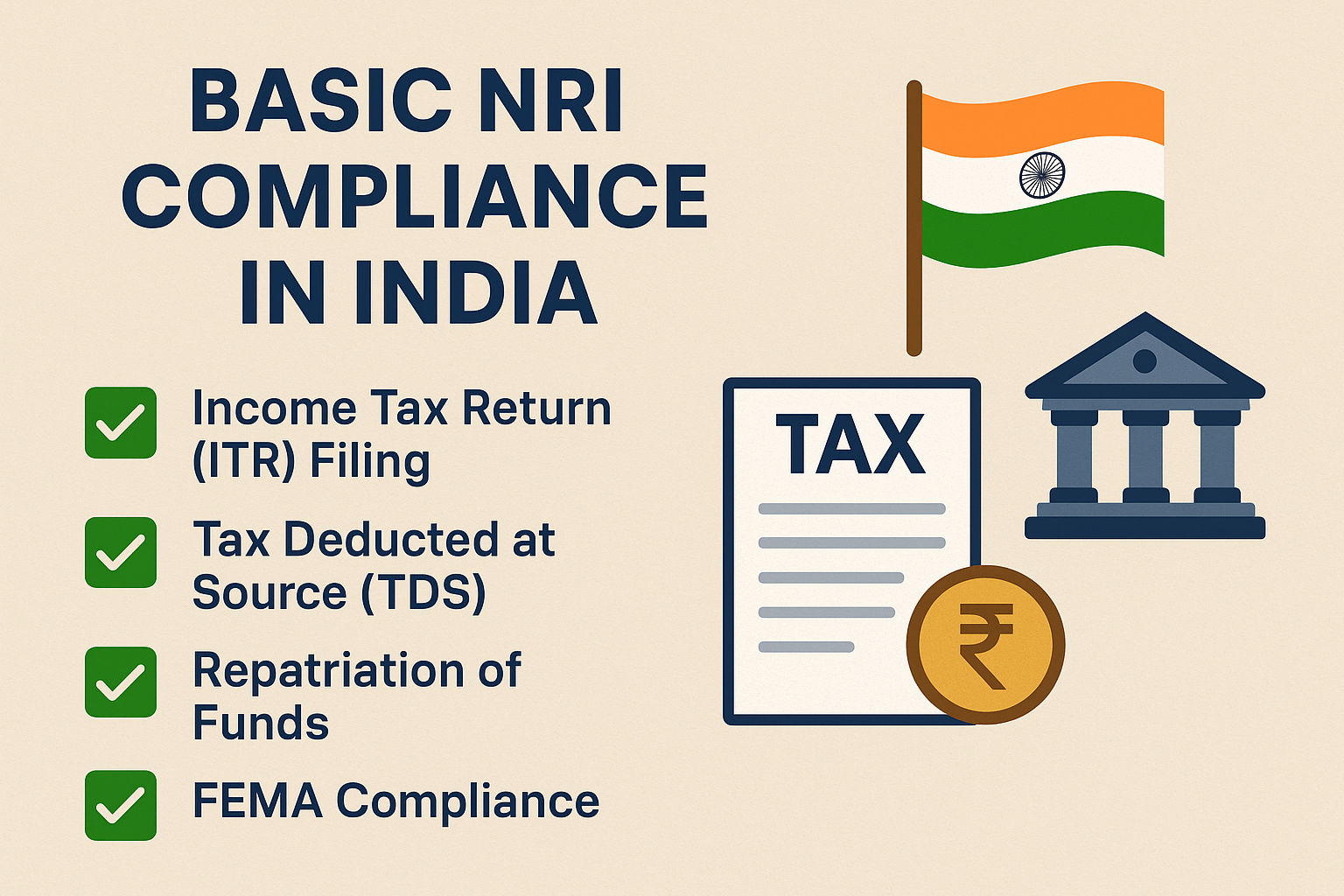
Basic NRI Compliance in India:What You Need to Know
🧾 Basic NRI Compliance in India: What You Need to Know With increasing global mobility, many Indians now live abroad but maintain financial, familial, or business interests in India. As a Non-Resident Indian (NRI), it’s essential to stay compliant with Indian laws to avoid penalties and ensure smooth management of your assets. Here’s a guide…
-
All About Income Tax Returns (ITRs): Your Guide for AY 2025–26
Filing your Income Tax Return (ITR) is not just a legal obligation but a financial responsibility that helps you stay compliant and build financial credibility. Whether you’re a salaried individual, business owner, freelancer, or NRI, understanding ITRs ensures better tax planning and peace of mind.
-

Additional Disclosures in ITR AY 2025-26 (Old Regime)
To improve transparency & verification, the Income Tax Dept. has rolled out additional disclosure requirements for key deductions- AY25-26
-

Who’s Mandated to File ITR in FY 2024-25?
who needs to file ITR. Basic Limit for ITR Filing
-
Income Tax & FEMA NRI Compliance in India
In line with regulatory guidance and to ensure compliance under Indian laws, we bring to your attention certain key compliance requirements under the Foreign Exchange Management (FEMA) Act, 1999 and the Income Tax Act, 1961, that may apply to you as an NRI. Here is what you can do: 1. Update your Tax Residency Status…
-

What if ITR is not Filed before 31st July 2024?
Not filing your ITR by the due date can lead to several significant implications:
-

Early Tax Filers Beware
ITR forms for this year have been released on 1st April itself. But when it comes to tax, don’t be too early. Why? TDS, TCS data comes in by 31st May and Form 16 in early June. There could be mismatches.
-

Tax dept. urges taxpayers to file updated ITRs for specified financial transaction mismatches for AY 2021-22
Income Tax Department receives information of specified financial transactions of taxpayers, from various sources. To increase transparency and to promote voluntary tax compliance, this information is reflected in the AIS module and is available to the taxpayer for viewing.
-

Discard Income Tax Return
In a surprising move, the income tax department has introduced the ‘discard income tax return (ITR)’ feature on the income tax portal, a step seemingly taken to enhance compliance convenience. A discarded return will be considered as a return never filed. Know more.. Subscribe to Updates